
The Reimagined Ruin: The Story of The Getty Villa
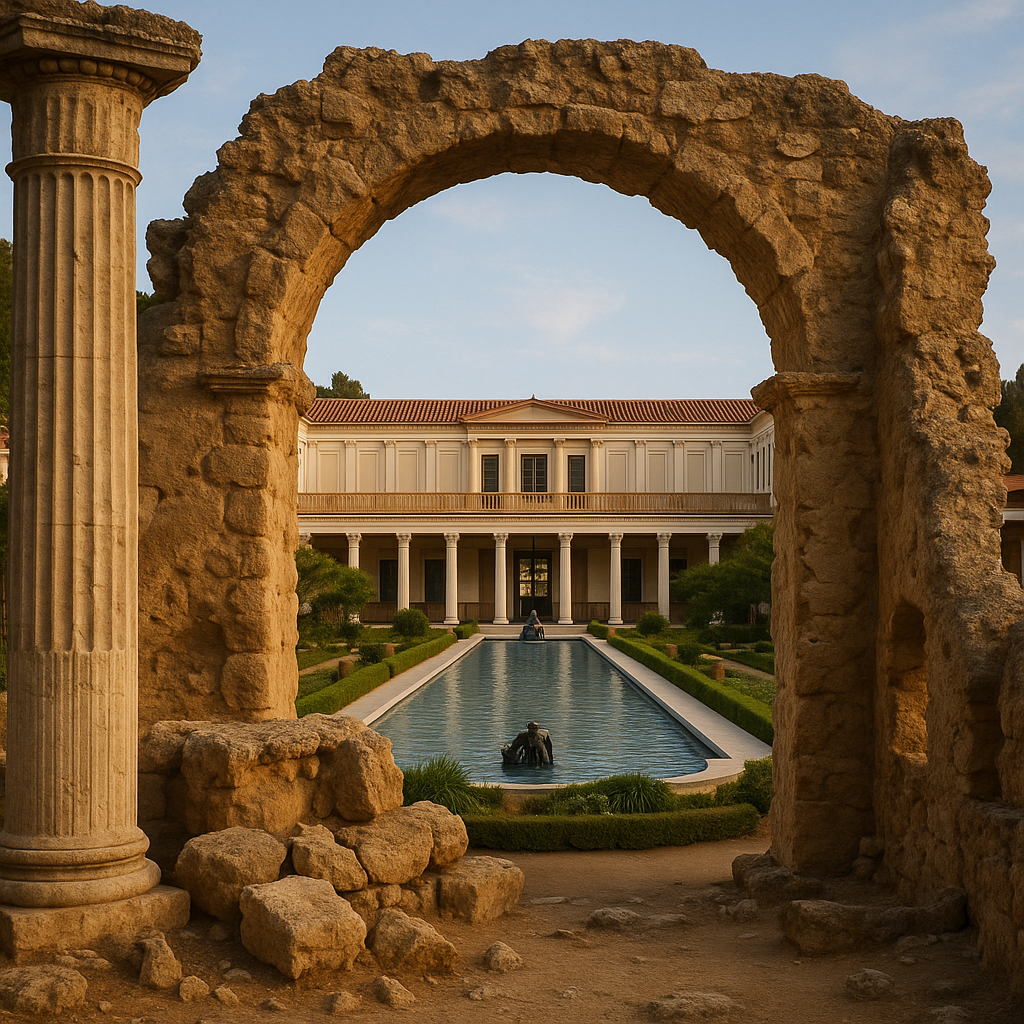
The Getty Villa stands as a remarkable testament to the enduring fascination with ancient art and architecture, capturing the imagination of countless visitors through its unique blend of history, culture, and art. Often described as a “reimagined ruin,” the Villa is not just a museum; it is an immersive experience that brings the ancient Roman world to life on the outskirts of Los Angeles. Its story is one of vision, passion, and an extraordinary dedication to preserving and presenting classical antiquities within an authentically recreated setting.
Origins of The Getty Villa: A Vision Brought to Life
The inception of the Getty Villa traces back to J. Paul Getty, one of America’s most notable art collectors and philanthropists. In the 1970s, Getty developed a deep interest in Roman art and architecture. Inspired by the ancient Roman country houses and particularly by the Villa dei Papiri in Herculaneum, Getty sought to recreate the villa to house his extensive collection of antiquities. His vision was bold and ambitious: not only to collect remarkable pieces of ancient art but to create a space that would allow visitors to step back in time and experience the grandeur of ancient Rome.
Construction began in the early 1970s on a hillside in Pacific Palisades, California. The design incorporated authentic Roman architectural elements—such as peristyles, frescoed walls, and mosaic floors—every detail meticulously crafted to evoke the look and feel of an ancient villa. The building was inaugurated in 1974 and was originally named the “J. Paul Getty Museum, Malibu Branch.” It soon became affectionately known as The Getty Villa.
Exploring The Getty Villa: A Journey Through Time
Visitors to The Getty Villa encounter an environment that is rich with historical resonance. Upon entering, one is greeted by the tranquil ambiance of Roman gardens, complete with fountains, herb beds, and pathways reminiscent of the Mediterranean landscape of two millennia ago. The overall layout reflects the design principles of a Roman domus, with inner courtyards and open spaces serving as focal points for social and cultural life.
Inside, the Villa’s galleries display an extensive collection of ancient Greek, Roman, and Etruscan art spanning over 6,500 years of history. The artifacts are carefully curated and displayed to highlight both their artistic beauty and their historical significance. Visitors can admire intricately carved statues, stunning ceramics, jewelry, and everyday objects that illuminate the lives of people from antiquity.
What truly sets The Getty Villa apart is its immersive approach. Instead of placing artifacts behind glass in sterile cases, the Villa arranges them within a richly contextualized environment. Frescoes on the walls, period-appropriate furniture, and even smells of herbs and flowers work together to create an illusion that visitors have stepped into a genuine ancient home.
The 2006 Transformation: Preserving History for Future Generations
By the early 2000s, the original Getty Villa required extensive restoration and modernization to meet contemporary museum standards and conservation needs. As a result, the Villa was closed in 1997, undergoing a transformative redesign lasting nearly a decade. Reopened in 2006, the renewed Getty Villa embraced 21st-century technology alongside its timeless architecture.
The restoration improved visitor amenities and accessibility while preserving the historical integrity of the space. New conservation laboratories were added to ensure the long-term preservation of artifacts. Additionally, updated educational programs and interactive exhibits were introduced, enhancing the learning experience for visitors of all ages.
Why The Getty Villa Matters Today
The Getty Villa is more than just a museum; it is an invaluable cultural resource that bridges ancient and modern worlds. It provides scholars, students, and enthusiasts a unique window into classical civilizations that shaped much of Western art, philosophy, and politics. Moreover, the Villa’s architecture and landscape serve as living examples of Roman aesthetics and lifestyle, educating visitors about history through sensory experience.
In an age dominated by digital media and virtual experiences, The Getty Villa offers an irreplaceable tactile and emotional connection to the past. Walking its halls and gardens, visitors gain a deeper appreciation for antiquity’s complexity, creativity, and enduring influence.
Conclusion
The story of The Getty Villa is one of imagination brought to tangible form—a reimagined ruin that honors the splendor of the ancient world while inviting contemporary audiences to delve into history. Through the vision of J. Paul Getty and ongoing dedication to preservation and education, the Villa continues to captivate and inspire. Whether you are a lover of art, history, or architecture, a visit to The Getty Villa promises a unique journey through time, where the echoes of the past resonate vividly in the present.